
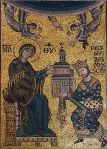
 Medieval European history is one of those subjects, I think, which can be approached only when one is still very young. All those Ottos and Heinrichs, Guelphs and Ghibellines (Welfen und Wibellingen), Hohenstaufens and Wittelsbachs, Frederick Barbarossa and Frederick II the Stupor Mundi – they should be learned by rote along with the times tables, je suis, tu es, il est, and amo, amas, amat, while the infant brain is still nice and spongy and absorbent. Continue reading
 Among the most popular objects on display at the
  The recent Anglican conference at Lambeth led to some controversial decisions, of which the most surprising, perhaps, was an agreement to work with other churches worldwide to fix the date of Easter. It was almost as surprising that the initiative for this startling break with tradition originated with the
 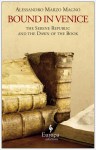 I was recently given one of the most infuriating books it has ever been my misfortune to read. Bound in Venice: The Serene Republic and the Dawn of the Book, by Alessandro Marzo Magno, translated from the Italian by Gregory Conti, and published by
 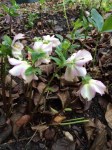 Quite a difficult decision, especially this season, when so many plants are prolonging their flowering, or beginning freakishly early. In the
 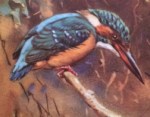 The myth first. Halcyone was the daughter of Aeolus, the god of the winds. She and her husband Ceyx, king of Thessaly (or of Trachis, in some versions), were among the dim bunch (see Niobe, Marsyas, Ixion et al.) who insulted the gods, in this case by comparing themselves to Zeus and Hera. Retribution swiftly followed, and the pair were turned into birds. Another version has Ceyx setting out to sea to consult an oracle; Halcyone finds his dead body washed up on shore. (A myth for our times, sadly.) The gods take pity on her grief and turn them both into seabirds; Aeolus calms the waves for a brief time around the winter solstice so that Halcyone can lay her eggs on a floating nest in peace. Hence ‘Halcyon Days’.
  No, me either, but I came across the term when I was looking up ‘gesso’, which is (among other things) the adhesive gunge on to which gold leaf is laid in illuminated manuscripts. The recipe for this type of gesso (Italian ‘chalk’, Greek γύψος) consists of ‘plaster, white lead, sugar and glue, and sometimes Armenian bole, which gives it a pink colour’. (You can see a video of the gilding process
 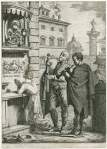 (Coming in just under the wire …) I had already selected this Christmas print from the
 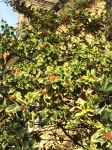 Completely predictable this month – it’s holly. And it’s just as well I took some local pictures well in advance, not only because the light levels are a bit grim as we crawl from St Lucy’s Day to the Shortest Day and the solstice, but also because the birds are already having a really good time stripping the trees and bushes of their berries. I was told (centuries ago) that berries being left on the trees is the sign of a hard winter to come, because the birds KNOW, and are holding back until things get really grim. If this is true, it suggests that the current ludicrously mild weather will continue …
-
Search
Professor Hedgehog’s Archive
- November 2024 (1)
- August 2024 (1)
- June 2024 (1)
- January 2024 (1)
- October 2023 (2)
- July 2023 (2)
- June 2023 (2)
- May 2023 (1)
- February 2023 (1)
- January 2023 (2)
- October 2022 (2)
- August 2022 (2)
- July 2022 (3)
- June 2022 (1)
- May 2022 (1)
- April 2022 (3)
- March 2022 (2)
- February 2022 (2)
- January 2022 (2)
- November 2021 (2)
- October 2021 (1)
- September 2021 (2)
- August 2021 (1)
- July 2021 (2)
- May 2021 (1)
- April 2021 (1)
- March 2021 (2)
- February 2021 (2)
- January 2021 (2)
- December 2020 (1)
- November 2020 (2)
- October 2020 (2)
- September 2020 (2)
- August 2020 (2)
- July 2020 (3)
- June 2020 (2)
- May 2020 (2)
- April 2020 (3)
- March 2020 (5)
- February 2020 (6)
- January 2020 (4)
- December 2019 (1)
- November 2019 (1)
- October 2019 (5)
- September 2019 (6)
- August 2019 (2)
- July 2019 (4)
- June 2019 (3)
- May 2019 (5)
- April 2019 (3)
- March 2019 (5)
- February 2019 (3)
- January 2019 (4)
- December 2018 (3)
- November 2018 (6)
- October 2018 (3)
- September 2018 (5)
- August 2018 (4)
- July 2018 (3)
- June 2018 (3)
- May 2018 (5)
- April 2018 (6)
- March 2018 (5)
- February 2018 (4)
- January 2018 (4)
- December 2017 (2)
- November 2017 (2)
- October 2017 (3)
- September 2017 (5)
- August 2017 (2)
- July 2017 (5)
- June 2017 (4)
- May 2017 (4)
- April 2017 (6)
- March 2017 (4)
- February 2017 (4)
- January 2017 (5)
- December 2016 (3)
- November 2016 (4)
- October 2016 (4)
- September 2016 (6)
- August 2016 (5)
- July 2016 (6)
- June 2016 (5)
- May 2016 (6)
- April 2016 (8)
- March 2016 (5)
- February 2016 (7)
- January 2016 (7)
- December 2015 (7)
- November 2015 (9)
- October 2015 (9)
- September 2015 (9)
- August 2015 (9)
- July 2015 (13)
- June 2015 (12)
- May 2015 (7)
- April 2015 (6)
- March 2015 (5)
Tags
- abolition
- Apple Day
- Archaeology
- art
- autumn
- botanic gardens
- botany
- British Museum
- cabinet of curiosities
- Cambridge
- Cambridge University Botanic Garden
- Canaletto
- ceramics
- Charles Darwin
- Charles Jones
- Chelsea Physic Garden
- Christmas
- churches
- Daniel Solander
- EdUKaid
- Exploration
- Fitzwilliam Museum
- Florence
- flower painting
- flower paintings
- folklore
- gardening
- Garden Museum
- gardens
- herbals
- herbaria
- Hieronymus Bosch
- holidays
- Italy
- Japan
- John Martyn
- John Ruskin
- knitting
- Linnaeus
- Linnean Society
- London
- London churches
- Lucca
- Mill Road Winter Fair
- mosaics
- Mrs Delany
- Museum of Cambridge
- museums
- Napoleon
- natural history
- painting
- paintings
- Palermo
- plant of the month
- plants
- printing
- retirement
- Royal Society
- Sicily
- Sir Hans Sloane
- Sir J.E. Smith
- Sir Joseph Banks
- slavery
- Spitalfields
- spring
- still life
- taxonomy
- The Gentle Author
- Thomas Bewick
- Titian
- Torcello
- trees
- Venice
- Veronese
- Worcestershire
Categories
 Professor Hedgehog's Journal