Portents of Autumn

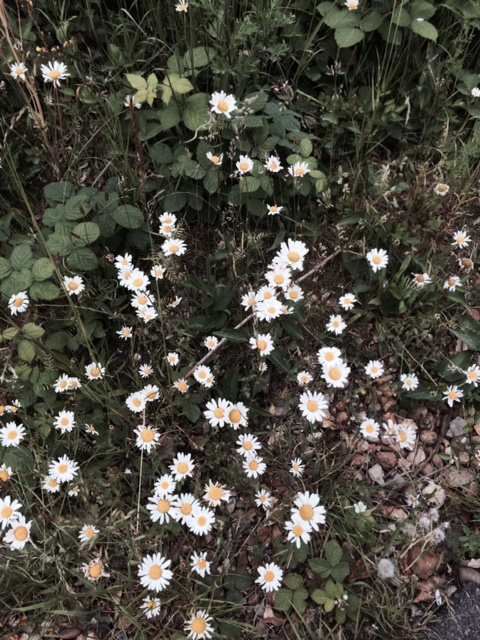
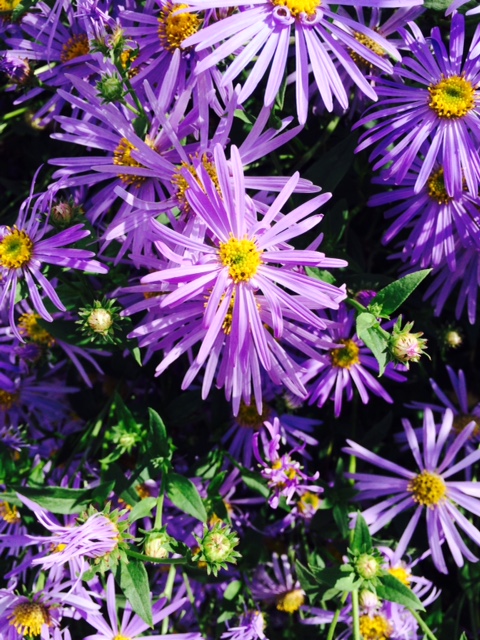
Michaelmas daisyAfter a very wet and gloomy August, things have bucked up slightly at the beginning of September, but though the late summer glories of the herbaceous beds at Cambridge University Botanic Garden are still looking wonderful, some of the trees are taking on an autumnal tinge, hips and haws, berries and cones are ripening, and seed heads are drying out. Here are some images from this morning, with apologies (as always) for those where I couldn’t find the label!

Caroline Continue reading
Posted in Cambridge, Gardens | Tagged , | Leave a comment

Billy Ruffian

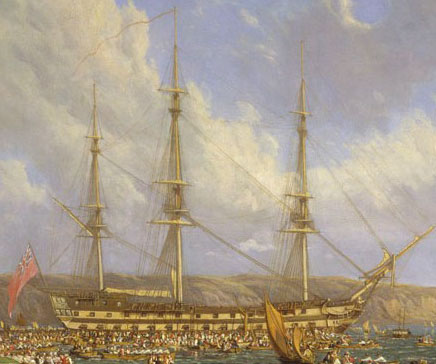
Frindsbury is a small town in Kent, opposite Rochester on the Medway, and from time to time regarded as part of that cathedral city, which Dickens used as the model for Cloisterham in The Mystery of Edwin Drood, his last, unfinished, novel. Inhabited since Palaeolithic times, its name is Anglo-Saxon, and it has a long and interesting history, but my focus today is on the activity in 1782 in the ship-building yard of Edward Greaves and Company, who had been commissioned by the Lords of the Admiralty to construct and fit out a 74-gun, third-rate ship of the line, to be called H.M.S. Bellerophon. Continue reading

Posted in History | Tagged , , , , | 3 Comments

Object of the Month: August

Conduit bookThis month’s object is a painting from the Museum of Cambridge: it depicts the famous carrier Thomas Hobson, whose method of business brought the expression ‘Hobson’s Choice’ into the language, and who was a great benefactor of the town of Cambridge. Continue reading

Posted in Cambridge, History, Literature, London, Museums and Galleries | Tagged , , , | 2 Comments

1876: Annus Normalis?

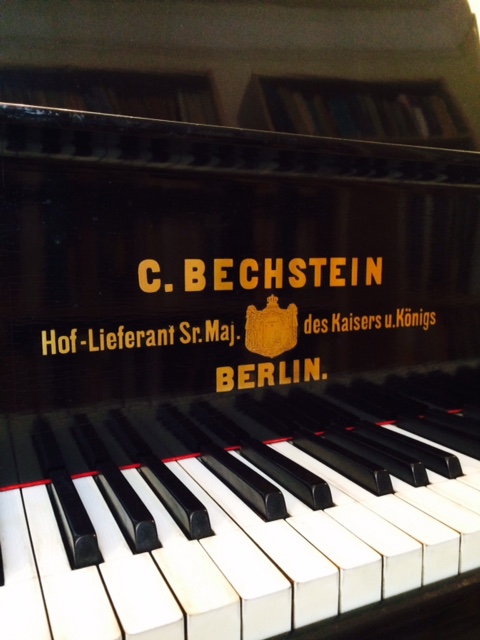
FrontHim Indoors is trying to persuade me that what we really need to make us happy in our declining years is the expenditure of large amounts of money in order to recondition his piano, made by the great firm of Bechstein in 1876, and last overhauled about fifty years ago. The piano had fifteen minutes of fame as a cover star many years ago (see below), but has, by and large, led a quiet life. Now, it appears, various treatments, uplifts, transplants, buffs and polishes, and, for all I know, Botox, are required to see it through another half century. Continue reading

Posted in Archaeology, History, Music | Tagged , , , , , , | Leave a comment

All Saints’ Church

All_SaintsI was walking up Jesus Lane the other day, and All Saints’ church was open. This Victorian pile was, for a long period in my Cambridge life, locked and threatened with demolition. Only about one hundred years after it was built, its congregation had diminished sufficiently to make it redundant, but happily, its destruction was averted by its being adopted by the Churches Conservation Trust, who restored the remarkable interior, and it is now regularly open to visitors. (The same charity also manages St Peter’s, the tiny Saxon church on Castle Hill, now part of the parish of the Ascension, and St John’s, in the nearby village of Duxford.) Continue reading

Posted in Art, Cambridge, History | Tagged , , , , , , | 2 Comments

Plant of the Month: August

Dahlia 1This month’s plant is the dahlia: they are everywhere at the moment, in their incredible variety, and I know almost nothing about them. I’m not even sure I like them all that much – their colours, and especially the complex structures of varieties like the pompom, sometimes look garish and even artificial. I usually have a few in pots, but never succeed in over-wintering the tubers, and I never know what to put them with: it seems to me that you really need a massive herbaceous border, or a layout (like that at Biddulph Grange) dedicated only to dahlias, to use them successfully. Continue reading

Posted in Botany, Gardens, History | Tagged , , , | 3 Comments

Compositae

Daisies… or Asteraceae, if you prefer, are basically the daisy family, ranging in size from the largest sunflowers to the smallest common daisy, Bellis perennis, and encompassing shrubs, vines and trees as well as the familiar herbaceous varieties. In terms of numbers the Compositae are possibly the biggest plant family, with over 23,500 species: though there are (as always) issues about when a species is not really a species. (It is also possible that the Orchidaceae are the biggest group…) But the place to muse on the varieties of plants in this enormous family is undoubtedly the Systematic Beds at Cambridge University Botanic Garden, where on a sunny August day they are flowering their heads off. Continue reading

Posted in Botany, Cambridge | Tagged , | 1 Comment

Twelve Things I Didn’t Know About Regensburg

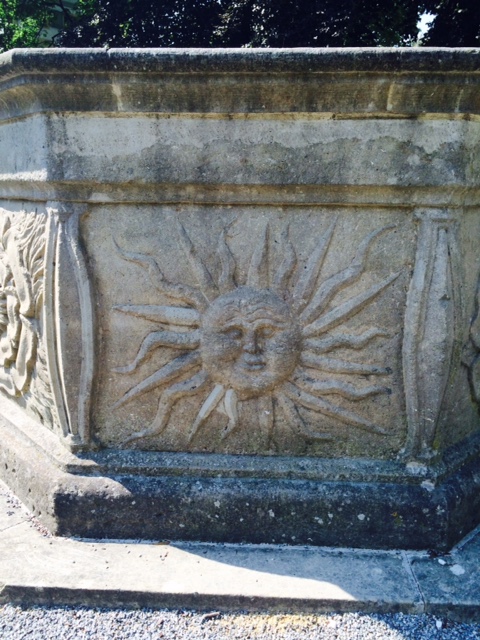
Well sunWe have just spent a long weekend in Regensburg, about which I thought I knew one Big Thing: the Diet of Ratisbon, 1541 (how A-level history still lingers, 50 years on…). But with the aid of some determined mooching about (in a heatwave: 35 degrees every day, and even a 10-minute rainstorm did nothing to reduce the temperature), my primitive German, and a very good guidebook, I found out much more … Continue reading

Posted in Archaeology, Art, History, Museums and Galleries | Tagged , , | 7 Comments

The Phone Book

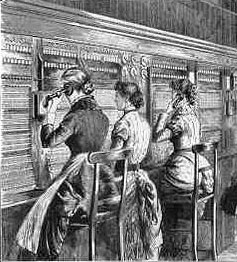
exchangeOne of the less likely treasures of the Museum of Cambridge is the two-sheet Cambridge telephone directory for 1896–7. (The National Telephone Company set up in Cambridge in 1892.) It is interesting equally for the names it lists as for those it doesn’t. The most obvious among the missing are most of the colleges: those wired up were Jesus, Emmanuel (with four phone lines/extensions: St Andrew’s Street, the Parker Street Hostel (with two) and the kitchen), Caius, Girton, Newnham, and Selwyn (one line each) King’s and Trinity (the colleges and the kitchens) and Trinity Hall (the kitchen only). Continue reading

Posted in Cambridge, History | Tagged , , | 1 Comment

Paper Flowers Revisited

PassifloraThe British Museum has on display one of the copper plates which Sir Joseph Banks commissioned to be engraved for his planned ‘Natural History’ of the Endeavour voyage. I’m grateful to Sarah McDonald (@Artboretum), Heritage Collections Manager at the RHS Lindley Library (dream job, or what?), who re-tweeted the intriguing possibility that Mrs Delany had been inspired to create some of her famous and botanically accurate cut-paper flower images by Banks’ project. Continue reading

Posted in Art, Botany, History, Museums and Galleries | Tagged , , , , | 18 Comments