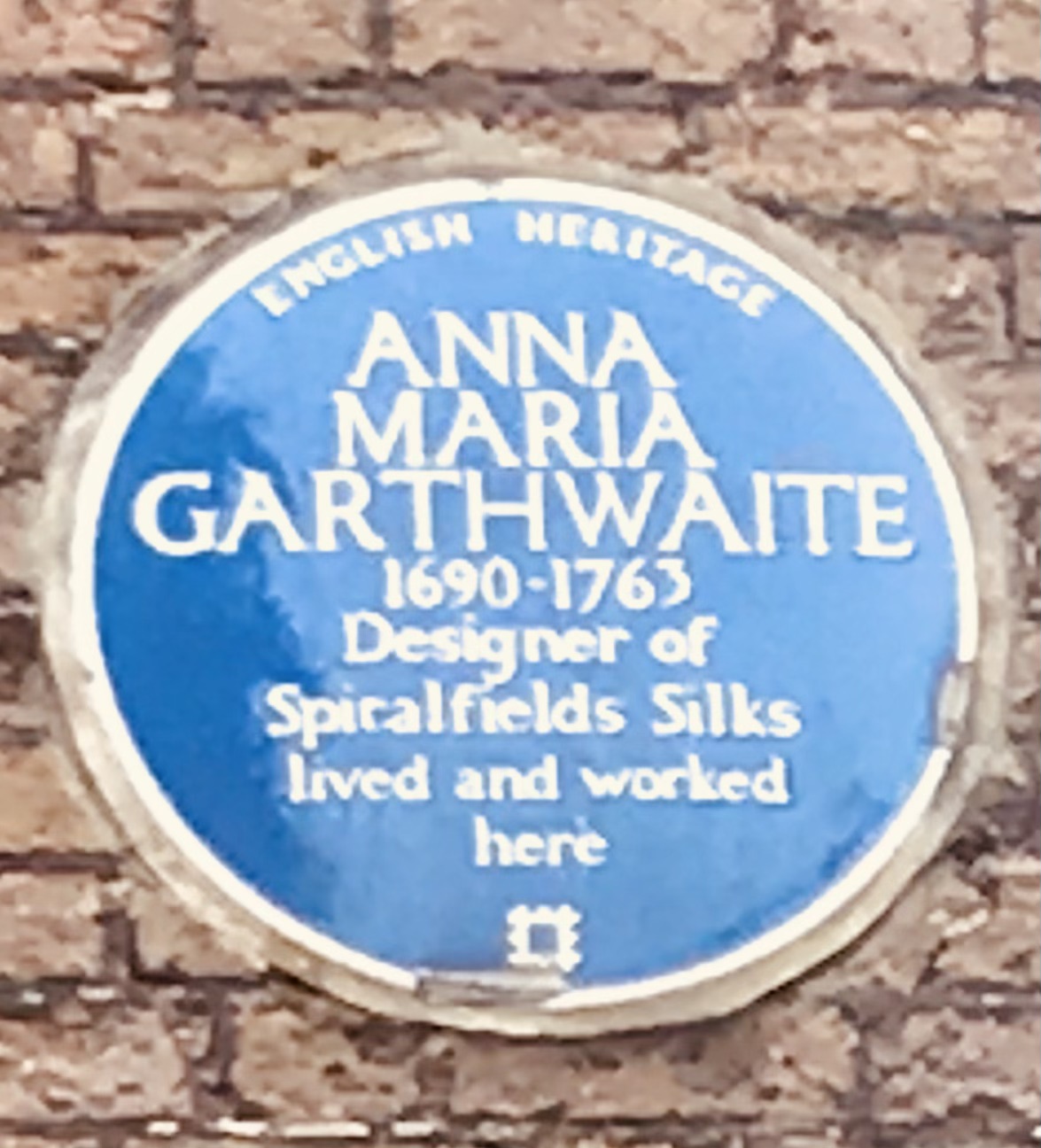
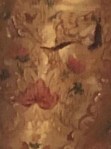
It is a well-known fact that the Spitalfields district of London was, during the eighteenth century, entirely populated by French Huguenot refugees, all busy weaving away in their loft workshops, producing gorgeous silks for worldwide trade, and breeding auriculas and other ‘florists’ flowers’ (cuttings and seeds of which they had brought with them as they fled across the Channel) in their leisure moments. As with many well-known facts, this is true only up to a point. Consider, as a counter-factual, the career of Anna Maria Garthwaite, spinster daughter of an Anglican clergyman, whose designs for woven silk (many of them happily preserved in the Victorian & Albert Museum) were hugely important in the success of the silk industry.
Continue reading I was prone to nominative determinism for more than half a century before I knew what it meant. A children’s biography of Grieg in my primary school library (who now remembers this series by Opal Wheeler and Sybil Deucher, which included Franz Schubert and his Merry Friends and Sebastian Bach, The Boy from Thuringia?) had a famous violinist say to the young Edvard, ‘You have made the voice of Norway sing!’
 On 7 October every year, I remind my faithful Twitter followers of the anniversary of the battle of Lepanto in 1571, at which the Ottoman Turkish fleet was comprehensively defeated by the combined forces of the Holy League – the Papal States, Spain, Venice, Genoa, the
 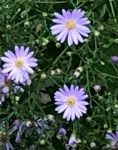 Given that the Equinox has just happening, and that it has just come to my attention (belatedly, I concede) that we ought to be calling a large number of asters Symphyotrichum instead, I thought I’d have a look at the Michaelmas daisy. I don’t grow them, with the exception of a rather pretty, delicate one which persists in the front garden, and which I don’t remember planting. In my distant youth, it was (along with buddleia and ragwort) one of the first plants I learned to distinguish, since it grew prolifically all over the bomb-site (I told you my youth was distant) which was the wonderful adventure playground for all us local children.
  We were having a nice mooch round the (startlingly quiet)
 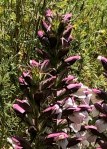 The name ‘acanthus’ was taken by Linnaeus from the Greek ἄκανθος, used by Aristotle among others to mean a prickly Mediterranean plant (today A. mollis), imitated in the Corinthian columns of Greek architecture; the related ἄκανθα means ‘thistle’. The family of Acanthaceae was first assembled by Antoine Laurent de Jussieu, and refined in 1847 by Christian Gottfried Daniel Nees von Esenbeck (1776–1858), the German botanist who described almost as many species as Linnaeus himself, and who after a distinguished academic career, lost his posts and honours after the 1848–9 revolutions, and died almost penniless.
 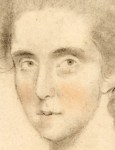 I was lured into reading about the melodramatic and unhappy life of Mary Eleanor Bowes (1749–1800), by the
 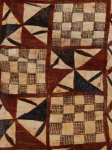 The other day, I found myself standing under a Broussonetia tree in the Cambridge University Botanic Garden (so happily now reopened, though
  I came across the name of Captain Gurle (also spelled Garle and Garrle) in the excellent
  Professor Hedgehog's Journal