
I have mentioned before Dr Richard Pulteney (1730–1801), the sole survivor of eleven children from an Old Anabaptist family near Loughborough, Leicestershire, who was apprenticed to an apothecary and then set up as an apothecary and surgeon in Leicester. After various vicissitudes (partly caused by potential patients being put off by his dissenting background), he settled in 1765 in Blandford Forum, Dorset, where he became a popular physician, though he never ceased to regret that he could not devote all his time to botany. Continue reading
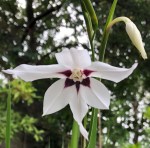 This month, I give you Gladiolus murielae, for no better reason (or, in my opinion, the extremely cogent reason) that I have, after several years of trying, actually got it to flower this year! Admittedly, one flower and one bud out of twelve corms is not usually a reason for wild celebration, but it’s much better than the zero I usually achieve.
  … and exit by the gift shop. You can of course, alternatively, enter via the Courtyard, which takes you through/past the gift shop first, on your way to the café. Cambridge friends will realise that I am taking about the
 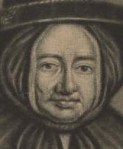 I was recently trying to find out who in Cambridge (apart from the
 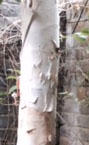 These portentous words appear in the introduction to the 1834 English edition of Letters from India by the French natural historian Victor Jacquemont (1801–32), ‘Travelling Naturalist to the Museum of Natural History, Paris’. If his name is remembered now in Britain, it is probably for the western Himalayan birch, Betula utilis var. jacquemontii, named by Édouard Spach in 1841, which interestingly does not appear in this late nineteenth-century list of the plants named in his honour.
 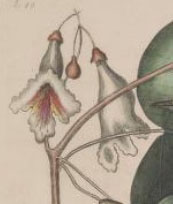 I had vaguely hoped that during my recent sojourn in Florida I might see a catalpa in (almost) its native habitat. Its usual southernmost range is further north in the state, but I had plans to visit
  The Tampa Museum of Art
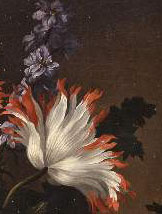 Well, had you (assuming, of course, that you are not an expert in eighteenth-century French flower paintings) heard of Gerard van Spaendonck? You will gather from his name that he was not French – he was born in 1746, in Tilburg now ‘wool capital of the Netherlands’, but then part of the Duchy of Brabant, the debatable land tussled over by for two centuries by France, Spain and the Dutch Republic. As with
 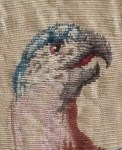 This fire screen, standing 104 cm (3 ft 5 ins) tall, must in the summer have graced fireplace of a well-to-do eighteenth-century individual, probably in France. When I first noticed it, I thought it was embroidered, perhaps by a daughter of the house, but on closer inspection, and after looking it up on the
  One tends not to think of Charles V as a jolly type. Admittedly, it would have been difficult for him to have been as gloomy as his son, and heir to the Spanish Empire, Philip II (‘horrible, and holy’ as
 -
Search
Professor Hedgehog’s Archive
- November 2024 (1)
- August 2024 (1)
- June 2024 (1)
- January 2024 (1)
- October 2023 (2)
- July 2023 (2)
- June 2023 (2)
- May 2023 (1)
- February 2023 (1)
- January 2023 (2)
- October 2022 (2)
- August 2022 (2)
- July 2022 (3)
- June 2022 (1)
- May 2022 (1)
- April 2022 (3)
- March 2022 (2)
- February 2022 (2)
- January 2022 (2)
- November 2021 (2)
- October 2021 (1)
- September 2021 (2)
- August 2021 (1)
- July 2021 (2)
- May 2021 (1)
- April 2021 (1)
- March 2021 (2)
- February 2021 (2)
- January 2021 (2)
- December 2020 (1)
- November 2020 (2)
- October 2020 (2)
- September 2020 (2)
- August 2020 (2)
- July 2020 (3)
- June 2020 (2)
- May 2020 (2)
- April 2020 (3)
- March 2020 (5)
- February 2020 (6)
- January 2020 (4)
- December 2019 (1)
- November 2019 (1)
- October 2019 (5)
- September 2019 (6)
- August 2019 (2)
- July 2019 (4)
- June 2019 (3)
- May 2019 (5)
- April 2019 (3)
- March 2019 (5)
- February 2019 (3)
- January 2019 (4)
- December 2018 (3)
- November 2018 (6)
- October 2018 (3)
- September 2018 (5)
- August 2018 (4)
- July 2018 (3)
- June 2018 (3)
- May 2018 (5)
- April 2018 (6)
- March 2018 (5)
- February 2018 (4)
- January 2018 (4)
- December 2017 (2)
- November 2017 (2)
- October 2017 (3)
- September 2017 (5)
- August 2017 (2)
- July 2017 (5)
- June 2017 (4)
- May 2017 (4)
- April 2017 (6)
- March 2017 (4)
- February 2017 (4)
- January 2017 (5)
- December 2016 (3)
- November 2016 (4)
- October 2016 (4)
- September 2016 (6)
- August 2016 (5)
- July 2016 (6)
- June 2016 (5)
- May 2016 (6)
- April 2016 (8)
- March 2016 (5)
- February 2016 (7)
- January 2016 (7)
- December 2015 (7)
- November 2015 (9)
- October 2015 (9)
- September 2015 (9)
- August 2015 (9)
- July 2015 (13)
- June 2015 (12)
- May 2015 (7)
- April 2015 (6)
- March 2015 (5)
Tags
- abolition
- Apple Day
- Archaeology
- art
- autumn
- botanic gardens
- botany
- British Museum
- cabinet of curiosities
- Cambridge
- Cambridge University Botanic Garden
- Canaletto
- ceramics
- Charles Darwin
- Charles Jones
- Chelsea Physic Garden
- Christmas
- churches
- Daniel Solander
- EdUKaid
- Exploration
- Fitzwilliam Museum
- Florence
- flower painting
- flower paintings
- folklore
- gardening
- Garden Museum
- gardens
- herbals
- herbaria
- Hieronymus Bosch
- holidays
- Italy
- Japan
- John Martyn
- John Ruskin
- knitting
- Linnaeus
- Linnean Society
- London
- London churches
- Lucca
- Mill Road Winter Fair
- mosaics
- Mrs Delany
- Museum of Cambridge
- museums
- Napoleon
- natural history
- painting
- paintings
- Palermo
- plant of the month
- plants
- printing
- retirement
- Royal Society
- Sicily
- Sir Hans Sloane
- Sir J.E. Smith
- Sir Joseph Banks
- slavery
- Spitalfields
- spring
- still life
- taxonomy
- The Gentle Author
- Thomas Bewick
- Titian
- Torcello
- trees
- Venice
- Veronese
- Worcestershire
Categories
 Professor Hedgehog's Journal