
 After the battle of Waterloo brought an end to the Napoleonic Wars and peace to Europe, everyone lived happily ever after (except Napoleon, obviously). The next thing to happen was the death of George III in 1820, after which the Prince Regent got a real job for ten or so years before passing the baton on to his brother William IV, ‘Sailor Bill’. Continue reading
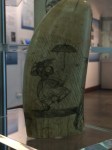 Some of the most ancient artefacts which have survived to grace our modern museums were carved from bone or ivory: hardwearing substances, which survive almost anything except a severe conflagration or a deliberate act of grinding them to shards or powder. The earliest known worked ivory consists of beads made from mammoth tusks, found in the area of Baden-Württemberg in Germany and in various cave sites in France, and figurines from the same caves have been dated to 35,000–30,000 BP.
  Lisbon claims to be the oldest city in the world, on the basis that it was thriving long before Athens, Rome etc. It also claims to have been founded by Odysseus on his way back from Troy: the name used to be Olyssepolis (city of Ulysses), Olissipo, Lisboa. Julius Caesar was there, and called it Julia Felicitas, and there are many Phoenician, Roman, Germanic and Moorish remains still visible on, and especially under, its seven hills.
  I urge you to visit the small but perfectly formed exhibition currently in the Shiba Room of the
  What I know about the Tractarian controversy of the nineteenth century could be written on the head of a very tiny pin and is mostly drawn from the fiction of
  I have discovered (as I imagine that many (very) amateur naturalists do) a strong strain of speciesism in my makeup. It’s only a daisy, when looking for wild orchids at
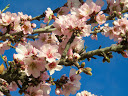
 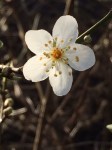 I decided to write this month about blackthorn, or sloe, the white-blossomed, early-flowering, native shrubby tree so often seen in hedgerows. Then I started doing some research, and discovered how complicated it all is, but I have tried my best …
  So, there we were on Monday morning at Palermo train and bus station, clutching our remaining possessions to us, not sure what else the
  The things I most disliked about Sicily were (a)
  ‘Apart from that, Mrs Lincoln, how was the evening?’ My recent encounters with the criminal fraternity of Palermo were pretty trivial by comparison with the assassination of a President of the United States, but they really brought home to me the difference between knowledge and logic on the one hand and personal and emotional experience on the other.
 -
Search
Professor Hedgehog’s Archive
- November 2024 (1)
- August 2024 (1)
- June 2024 (1)
- January 2024 (1)
- October 2023 (2)
- July 2023 (2)
- June 2023 (2)
- May 2023 (1)
- February 2023 (1)
- January 2023 (2)
- October 2022 (2)
- August 2022 (2)
- July 2022 (3)
- June 2022 (1)
- May 2022 (1)
- April 2022 (3)
- March 2022 (2)
- February 2022 (2)
- January 2022 (2)
- November 2021 (2)
- October 2021 (1)
- September 2021 (2)
- August 2021 (1)
- July 2021 (2)
- May 2021 (1)
- April 2021 (1)
- March 2021 (2)
- February 2021 (2)
- January 2021 (2)
- December 2020 (1)
- November 2020 (2)
- October 2020 (2)
- September 2020 (2)
- August 2020 (2)
- July 2020 (3)
- June 2020 (2)
- May 2020 (2)
- April 2020 (3)
- March 2020 (5)
- February 2020 (6)
- January 2020 (4)
- December 2019 (1)
- November 2019 (1)
- October 2019 (5)
- September 2019 (6)
- August 2019 (2)
- July 2019 (4)
- June 2019 (3)
- May 2019 (5)
- April 2019 (3)
- March 2019 (5)
- February 2019 (3)
- January 2019 (4)
- December 2018 (3)
- November 2018 (6)
- October 2018 (3)
- September 2018 (5)
- August 2018 (4)
- July 2018 (3)
- June 2018 (3)
- May 2018 (5)
- April 2018 (6)
- March 2018 (5)
- February 2018 (4)
- January 2018 (4)
- December 2017 (2)
- November 2017 (2)
- October 2017 (3)
- September 2017 (5)
- August 2017 (2)
- July 2017 (5)
- June 2017 (4)
- May 2017 (4)
- April 2017 (6)
- March 2017 (4)
- February 2017 (4)
- January 2017 (5)
- December 2016 (3)
- November 2016 (4)
- October 2016 (4)
- September 2016 (6)
- August 2016 (5)
- July 2016 (6)
- June 2016 (5)
- May 2016 (6)
- April 2016 (8)
- March 2016 (5)
- February 2016 (7)
- January 2016 (7)
- December 2015 (7)
- November 2015 (9)
- October 2015 (9)
- September 2015 (9)
- August 2015 (9)
- July 2015 (13)
- June 2015 (12)
- May 2015 (7)
- April 2015 (6)
- March 2015 (5)
Tags
- abolition
- Apple Day
- Archaeology
- art
- autumn
- botanic gardens
- botany
- British Museum
- cabinet of curiosities
- Cambridge
- Cambridge University Botanic Garden
- Canaletto
- ceramics
- Charles Darwin
- Charles Jones
- Chelsea Physic Garden
- Christmas
- churches
- Daniel Solander
- EdUKaid
- Exploration
- Fitzwilliam Museum
- Florence
- flower painting
- flower paintings
- folklore
- gardening
- Garden Museum
- gardens
- herbals
- herbaria
- Hieronymus Bosch
- holidays
- Italy
- Japan
- John Martyn
- John Ruskin
- knitting
- Linnaeus
- Linnean Society
- London
- London churches
- Lucca
- Mill Road Winter Fair
- mosaics
- Mrs Delany
- Museum of Cambridge
- museums
- Napoleon
- natural history
- painting
- paintings
- Palermo
- plant of the month
- plants
- printing
- retirement
- Royal Society
- Sicily
- Sir Hans Sloane
- Sir J.E. Smith
- Sir Joseph Banks
- slavery
- Spitalfields
- spring
- still life
- taxonomy
- The Gentle Author
- Thomas Bewick
- Titian
- Torcello
- trees
- Venice
- Veronese
- Worcestershire
Categories
 Professor Hedgehog's Journal