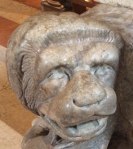
 The Twitter community of medieval historians have a recurring thread called #notalion. I ventured a humble contribution myself after our jaunt to Lisbon last year, but today I have come across a horde (herd, pack, pride) of not-quite-lions, all conveniently close together in and around the duomo of Modena, where we are spending a few days before moving on to La Serenissima. (It’s a tough job, being rude about the Biennale, but somebody has to do it.) Continue reading
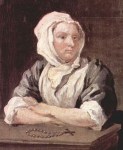 One of the things I’m doing at the moment is browsing through nineteenth-century issues of the Gardeners’ Chronicle (online – God bless the
  Over the Easter weekend, the children who live opposite were applying the life lesson of the
 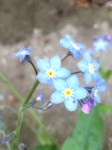 The forget-me-not is one of those plants which are ‘
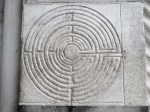 I never quite understood what was so great about St Martin slicing his cloak in two and giving half to a beggar: why didn’t he just hand over the whole cloak and be done with it? He was a soldier – would he have to account to his superiors for a missing cloak, whereas half a cloak he could get away with?
 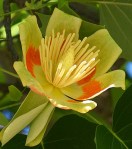 Though the constant thread running through his adult life was radical journalism (for which he spent most of the years 1810–12 in Newgate prison), William Cobbett (1763–1835) had many careers: farmer, soldier, grammarian, language teacher, author, economist, printer, publisher, Member of Parliament – and nurseryman. A plant and seed catalogue published by him (from internal evidence, one of a very frequent series, this issue dating to 4 December in a year after 1826) has just come to light in the archive which I am helping to sort through, and it is completely characteristic of the man.
  I’ve recently had the pleasure and privilege of not one but three ‘private views’, with talks, of the new exhibition, ‘
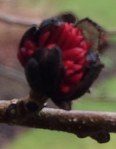 I have to confess that I had hoped that the Persian ironwood tree, Parrotia persica, had obtained its botanical name (first applied by C.A. von Meyer in 1831) because it was observed to be a favourite perch for parrots, but alas, real life isn’t like that, and the eponymous Parrot turns out to be a German called Friedrich Parrot. Since the German for ‘parrot’ is ‘Papagei’ (as in
  After reading
 -
Search
Professor Hedgehog’s Archive
- November 2024 (1)
- August 2024 (1)
- June 2024 (1)
- January 2024 (1)
- October 2023 (2)
- July 2023 (2)
- June 2023 (2)
- May 2023 (1)
- February 2023 (1)
- January 2023 (2)
- October 2022 (2)
- August 2022 (2)
- July 2022 (3)
- June 2022 (1)
- May 2022 (1)
- April 2022 (3)
- March 2022 (2)
- February 2022 (2)
- January 2022 (2)
- November 2021 (2)
- October 2021 (1)
- September 2021 (2)
- August 2021 (1)
- July 2021 (2)
- May 2021 (1)
- April 2021 (1)
- March 2021 (2)
- February 2021 (2)
- January 2021 (2)
- December 2020 (1)
- November 2020 (2)
- October 2020 (2)
- September 2020 (2)
- August 2020 (2)
- July 2020 (3)
- June 2020 (2)
- May 2020 (2)
- April 2020 (3)
- March 2020 (5)
- February 2020 (6)
- January 2020 (4)
- December 2019 (1)
- November 2019 (1)
- October 2019 (5)
- September 2019 (6)
- August 2019 (2)
- July 2019 (4)
- June 2019 (3)
- May 2019 (5)
- April 2019 (3)
- March 2019 (5)
- February 2019 (3)
- January 2019 (4)
- December 2018 (3)
- November 2018 (6)
- October 2018 (3)
- September 2018 (5)
- August 2018 (4)
- July 2018 (3)
- June 2018 (3)
- May 2018 (5)
- April 2018 (6)
- March 2018 (5)
- February 2018 (4)
- January 2018 (4)
- December 2017 (2)
- November 2017 (2)
- October 2017 (3)
- September 2017 (5)
- August 2017 (2)
- July 2017 (5)
- June 2017 (4)
- May 2017 (4)
- April 2017 (6)
- March 2017 (4)
- February 2017 (4)
- January 2017 (5)
- December 2016 (3)
- November 2016 (4)
- October 2016 (4)
- September 2016 (6)
- August 2016 (5)
- July 2016 (6)
- June 2016 (5)
- May 2016 (6)
- April 2016 (8)
- March 2016 (5)
- February 2016 (7)
- January 2016 (7)
- December 2015 (7)
- November 2015 (9)
- October 2015 (9)
- September 2015 (9)
- August 2015 (9)
- July 2015 (13)
- June 2015 (12)
- May 2015 (7)
- April 2015 (6)
- March 2015 (5)
Tags
- abolition
- Apple Day
- Archaeology
- art
- autumn
- botanic gardens
- botany
- British Museum
- cabinet of curiosities
- Cambridge
- Cambridge University Botanic Garden
- Canaletto
- ceramics
- Charles Darwin
- Charles Jones
- Chelsea Physic Garden
- Christmas
- churches
- Daniel Solander
- EdUKaid
- Exploration
- Fitzwilliam Museum
- Florence
- flower painting
- flower paintings
- folklore
- gardening
- Garden Museum
- gardens
- herbals
- herbaria
- Hieronymus Bosch
- holidays
- Italy
- Japan
- John Martyn
- John Ruskin
- knitting
- Linnaeus
- Linnean Society
- London
- London churches
- Lucca
- Mill Road Winter Fair
- mosaics
- Mrs Delany
- Museum of Cambridge
- museums
- Napoleon
- natural history
- painting
- paintings
- Palermo
- plant of the month
- plants
- printing
- retirement
- Royal Society
- Sicily
- Sir Hans Sloane
- Sir J.E. Smith
- Sir Joseph Banks
- slavery
- Spitalfields
- spring
- still life
- taxonomy
- The Gentle Author
- Thomas Bewick
- Titian
- Torcello
- trees
- Venice
- Veronese
- Worcestershire
Categories
 Professor Hedgehog's Journal